Is permanent make-up painful?
One of the questions I’m asked most often: “Does it hurt?” The honest answer: the sensation varies greatly from person to person. Most of my clients describe it as a light scratching or tingling – comparable to the feeling of an intensive brow plucking.
Before every treatment, a high-quality numbing cream is applied and left to work for about 20 to 30 minutes. This significantly reduces the sensation of pain. If needed, more numbing can be applied during the treatment. Many clients are surprised at how pleasant the process actually is – completely different from what they feared.
Good to know: pain sensitivity can vary depending on your cycle, stress level and personal constitution. I recommend not scheduling the treatment during your period, as the skin can be more sensitive then.
Does permanent make-up look artificial?
This myth is persistent – and understandable. Many people remember pictures from the 90s or early 2000s, when permanent make-up was often blocky, too dark or done in unsuitable shades. Those days are over.
Modern techniques such as microblading, nano brows or powder brows create the finest hair strokes or a soft powder effect that looks more natural than most conventional make-up products. The colour pigments are mixed individually and adapted to your natural skin undertone and hair colour.
The result should look as if you naturally had perfect brows, full lips or defined eyes. No more and no less. You can recognise good permanent make-up by the fact that you don’t immediately recognise it as such.
Does it last forever?
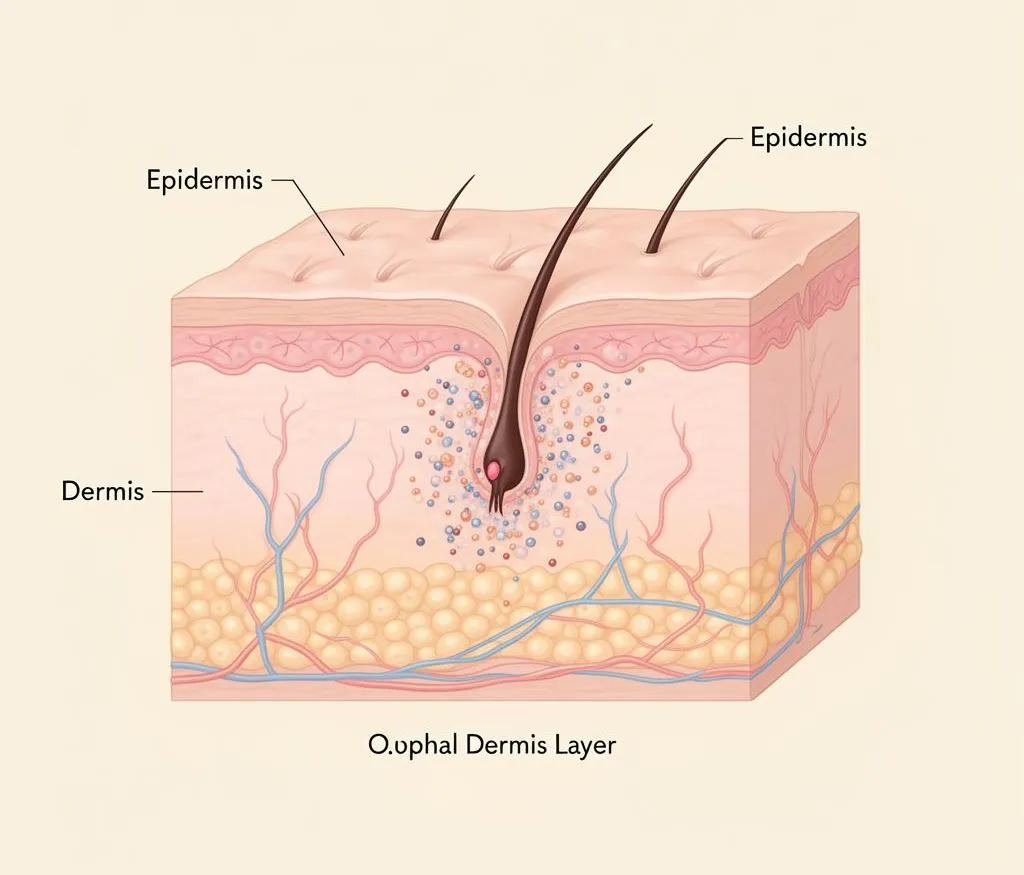
The name “permanent” make-up is often misleading. In fact, it is a semi-permanent procedure. The pigments are only placed in the uppermost layer of the skin – much less deeply than with a tattoo.
This means the colour fades over time. Depending on skin type, lifestyle and care, permanent make-up lasts about 1.5 to 3 years before a refresh makes sense. With oily skin it may fade faster; with dry skin the result often lasts longer.
This natural fading is an advantage: you are not tied to a shape or colour forever and can make adjustments when you refresh it – to changing trends, hair colour or personal preferences.
Is it dangerous?
As with any cosmetic treatment that involves the skin, there are potential risks – but professional work reduces them to a minimum.
Reputable studios work exclusively with sterile single-use needles, certified pigments and under strict hygiene standards. Before the treatment there is a detailed consultation in which health-related contraindications are discussed.
A patch test before the first treatment is standard with reputable providers. It checks whether there is an allergic reaction to the pigments used.
Choosing the right studio is crucial for safety: look for certifications, proof of hygiene, a professional portfolio and transparent advice. A good studio will never put you under pressure and will always be honest about possible risks.
Is PMU only for certain people?
Permanent make-up is more versatile than many think. It is suitable for almost all skin types and skin tones – from very fair to very dark skin. The choice of pigment is individually adapted so that the right result can be achieved for every complexion.
PMU is not just about aesthetics. Many clients come to me after medical procedures – for example after chemotherapy, with alopecia or after scarring. In these cases, permanent make-up can help regain self-confidence and feel comfortable again.
Age doesn’t matter either: whether you’re 25 or 65 – what counts is the personal wish for a well-groomed, natural appearance. However, there are some contraindications that are clarified in the consultation, including pregnancy, certain skin conditions or taking blood-thinning medication.